Monthly Archives: January 2011

Apatite Gemstone

Apatite Gemstone

Apatite

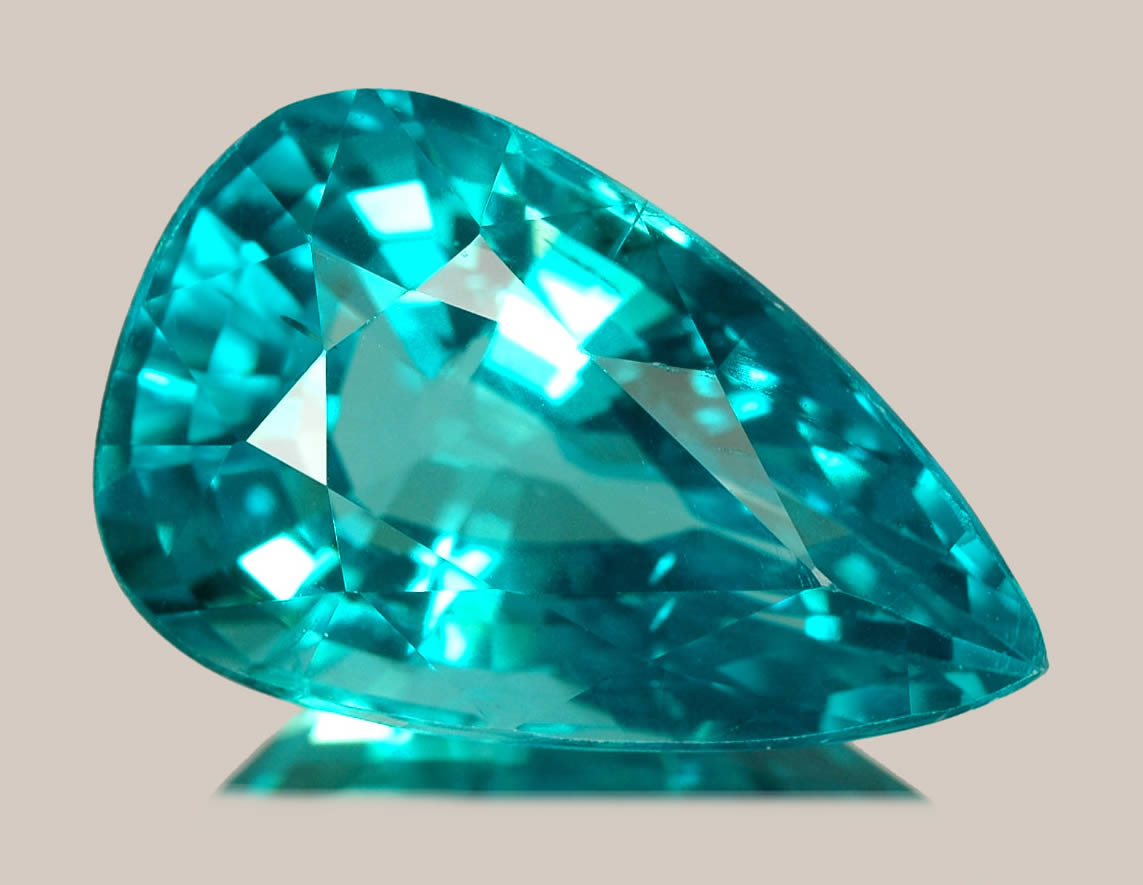
Apatite is a naturally occurring gemstone. It is basically known for its asparagus green color but it is found in wide range of colors, from colorless to pink, yellow, blue to violet. The best apatite is neon greenish blue with a clean clarity. The cost of the stone increases with the intensity of the color.

Apatite is a member of the Apatite group, a group of isomorphous hexagonal minerals. Apatite may be regarded as a single mineral, but is usually divided into three more minerals: Fluorapatite, Chlorapatite, and Hydroxylapatite. Since it is hard to distinguish between these minerals, and since they may partially replace each other, a distinction between them is rarely made, and they are simply called “Apatite”. However, most Apatite is Fluorapatite, the most common member by far.

The name, ‘apatite’ has been taken from a Greek word ‘apate,’ which mean to deceive. It is so named because one can be easily get confused with variety of other stones like tourmaline, peridot and beryl.

Apatite is found in all igneous, sedimentary and metamorphic rocks. It can also be cut as gems but the softness of apatite prevents its acceptance as a gemstone.

Apatite is a common mineral, and fine localities are worldwide. Enormous deposits are in the Kola Peninsula, Russia, containing both crystals and botryoidal material. Some of the finest crystals came from Ehrenfriedersdorf, Saxony Germany, where they are blue to purple in color. Colorless, hexagonal crystals were found in the Tyrol, Austria, and excellent material from Panasqueira, Portugal. Deep blue crystals are found in Campo Formosa, Bahia, Brazil, and in Sri Lanka. Enormous deposits mined for industrial use exist in Nauru, Morocco, Algeria, Tunisia, Egypt, and Israel.


www.indonesiajewelry.com

Andesit Labradorite

Andsine Labradorite

Andesine Labradorite

The labradorite gemstone gets its name from the region Labrador in Canada where this gem stone is found in plenty. Even before the year 1000, the natives of Maine used this gem for decoration. However, it was only in the 1770’s that the labrafdorite got its name, when it was found by Moravian Missionaries in Labrador.

Labradorite occurs in large crystal masses in anorthosite rock and shows an iridescence or play of colors, like the wings of tropical butterflies. Iridescence is an optical phenomenon and is a characteristic property of surfaces in which the hue changes according to the angle from which the surface is viewed (as may be seen in butterfly wings).

Labradorite is a dark gray colour mineral. In most cases, it displays only one or two iridescent colors and these are mostly blue and green. This gives out an amazing rich greenish blue color. The labradorite variety that shows more that two spectral colors is called Spectrolite. This variety displays a wide variety of amazing spectral colors like yellow, orange and red as well as blue and green. These color change depends upon the viewing angle.

Andesine labradorite is a unique kind of gemstone, renowned for its beauty and form. Andesine labradorite, also called andesine or andesine feldspar, is a type of feldspar. It exists in a variety of colors, including yellow, green, organge and red, often with different inclusions that create a unique shimmering effect. Andesine labradorite belongs to the plagioclase feldspar series of minerals and occurs in Norway, Greenland and the Andes, which is the name taken from.

Red andesine labradorite shows increased absorption across the visible spectrum of light (from red to violet). Red andesine labradorite reportedly shows an “Alexandrite effect”: when a gemstone can show a distinctive color change when viewed under different sources of light.

Red andesine labradorite is primarily used in the jewelry industry. Stones of various sizes and shapes are carved and set in rings, pendants, earrings, bracelets, watches, broaches and the like. Red andesine is valued in the ceramic industry and is important in the manufacture of tiles, stones and bricks for landscape gardens, floors and swimming pools. The gemstone is also used in artwork, including on decorative boxes and engraving.

www.IndonesiaJewelry.com

Andalusite

Andalusite Gemstone

Andalusite

Andalusite is named after Andalusia, the province of Spain where it was first discovered. While it is a strikingly beautiful gem, it is largely unknown by the gem buying public. With a hardness of 7.5 on the Mohs scale, it is very suitable for all kinds of jewelry. Andalusite is used widely in making jewelry and objets d’arts, on account of its hard texture and durability. It is often regarded as a poor cousin to the extremely valuable though rare Alexanderite gemstone, since it mimics the stone in color play, showing a range of earth tones. It is a very popular gem in jewelry, especially for men. One of the other reasons andalusite has been referred to as “poor man’s alexandrite” is the fact that it is reasonably priced—anywhere from $40 to $200 per carat, which is far less than natural alexandrite.

The colors of andalusite cover the range of yellow-green, green, brownish red and reddish brown. Depending on the cut each gemstone carries two colors that also differ in intensity, or blend into a mosaic.

The attraction of andalusite comes from its play of colors if one changes the viewing angle. A similar effect is gained when the light comes from different directions. Andalusite is a naturally occurring gemstone, meaning it does not require any enhancements, such as heat, to help achieve its beauty.

Spain is no longer the primary source for andalusite. In today’s era, Sri Lanka and Brazil provide a large portion of andalusite gemstones. In addition to Spain, Sri Lanka, and Brazil, andalusite has also been found in the United States, Canada, Australia, and Russia.

Chiastolite, also known as star andalusite, contains inclusions of carbon that is arranged in the formation of a cross. In many countries, these have been used as amulets because of the symbolism of the cross. Star andalusite is thought to be a protective gemstone against “evil eye” curses. Metaphysically speaking, some people believe andalusite broadens the intellect and provides mental clarity to better solve problems.

www.indonesiajewelry.com

Types Of Agate

Types Of Agate

Types Of Agate

Agate is a beautiful mineral that occurs in an amazing variety of colors, shapes and patterns. Agate is a unique stone that is part of the quartz family.

It is important to note that there are many types of Agate, in fact Agate types are created each year. They are mainly coined new terms for marketing purposes and can consist of the following names: Blue Lace Agate, Eye Agate, Irish Agate, Rainbow Agate and Snake Skin Agate, among many others.

Fortification Agate

This is the most common and distinctive type of agate. In these agates, bands crystallized into concentric layers that more or less follow the shape of the cavity. The banding resembles an aerial view of a fort.

Water-Line Agate (also called water-level or onyx)

During its formation, silica-rich solution either entered the cavity slowly laying one band at a time, excess water drained out leaving a small amount of silica to settle out into separate bands, or the vesicle filled under low pressure. In any case, the silica crystallization in water-level agates is controlled by gravity in one orientation, forming a stack up of parallel bands.

Shadow Agate

Some agates exhibit a shadow effect in which there is what appears to be movement across the agate layers when the specimen is rocked back and forth (or your orientation to the specimen moves). This optical effect only occurs when there are alternating translucent and opaque bands. It is caused when light goes into the agate, but is not reflected out.

Tube Agate

Tube Agate During the formation of some agates, parallel projections of tiny hair-thin mineral rods grow first within the silica gel, around which later the chalcedony agate micro-crystals form. In some cases the inclusions remain, but sometimes they weather away leaving hollow tubes that subsequently fill in with silica.

Eye Agates

This mysterious agate characteristic is believed to be formed when most of the silica gel drains from the cavity, leaving only a droplet that “beads up” on the inside wall of the cavity. This droplet crystallizes into solid chalcedony “eyes”. In some cases, crystal growth will continue from this droplet in a manner similar to the formation of stalactites in caves. Later, the pocket fills in with the usual deposition of chalcedony microcrystals.

Plume Agate

These agates initially had formations on their outside layer that formed prior to the deposition of chalcedony bands. They are filament growths of mineral inclusions that resemble ferns or feathers.

Geode Agate

Geode Agate In some cases the supply of silica-rich water runs out before the entire cavity fills in. When there is a hollow center within a crystalline outer fill, the specimen is considered a geode. Not all geodes have agate banding, but many do. Also, the inner layers can form into several different types of silica mineral crystals and may even have other types of mineral crystals.

Moss Agate

Moss Agate Moss agates have clusters of mineral inclusions that resemble plants, trees, or landscapes. Most moss agate inclusions are comprised of iron or manganese oxide. In some cases, the inclusions inhibit chalcedony banding allowing the mineral clusters free reign to grow within the silica gel.

Seam Agate

Seam agates for in cracks within host rock, rather than in rounder pockets. The bands form in parallel rows that follow and fill in the crack or seam.

These types of Agate are usually create into beautiful stones that are then placed on rings, as charms, bracelets, necklaces, brooches, dream catchers etc. Agate is very strong, resists acid and is an excellent stone to work with when it comes to jewelry. Agate is also used in beautiful mosaics and picture frames.

www.IndonesiaJewelry.com
Aegirine Stone

Aegrine Stone

Aegirine

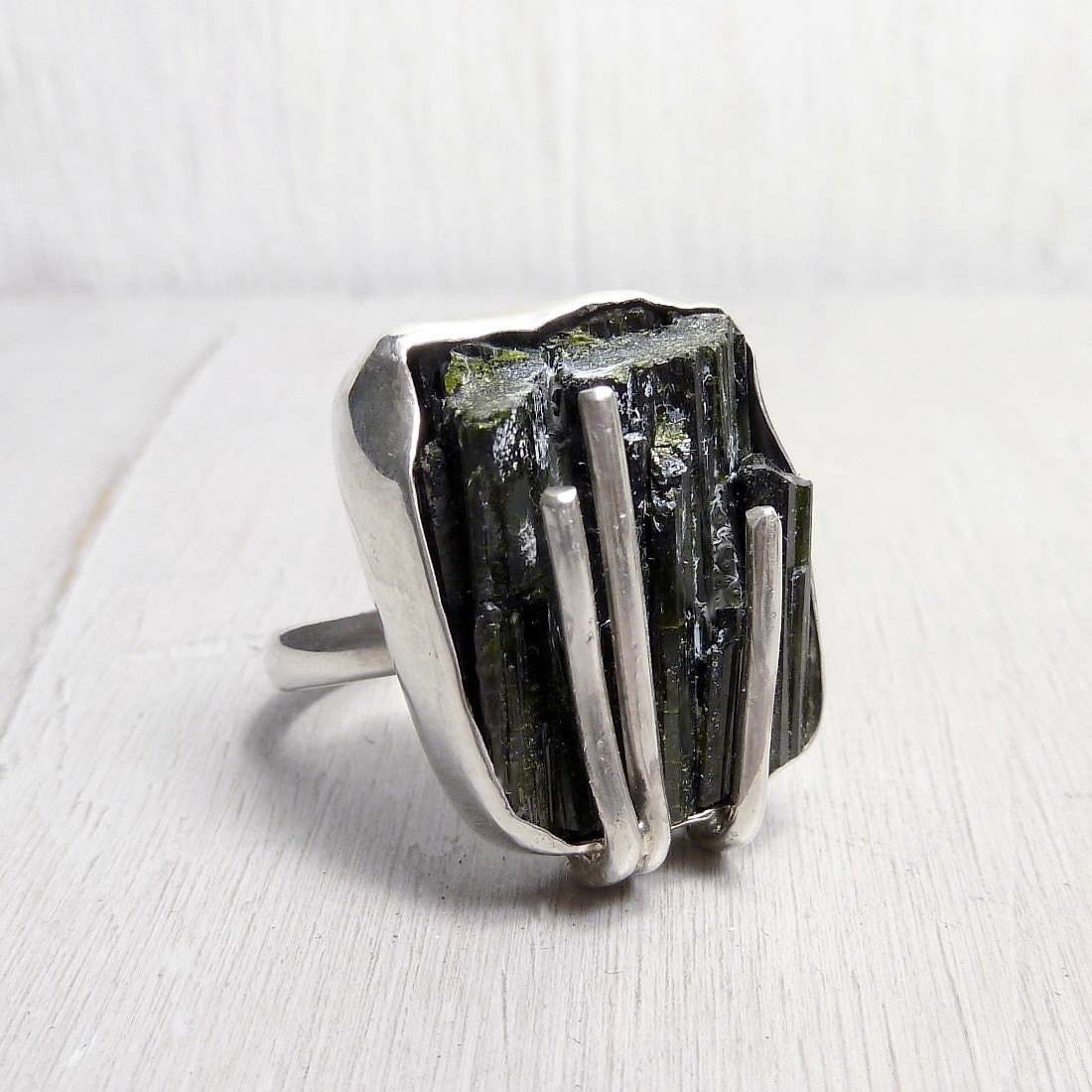
Aegirine was first described in 1835 for an occurrence in Rundemyr, Øvre Eiker, Buskerud, Norway. Aegirine was named after Ægir, the Teutonic god of the sea. A synonym for the mineral is acmite (from Greek ???? “point, edge”) in reference to the typical pointed crystals.

It is black, brown, or green on thin, brittle, translucent edges, a glassy luster with uneven cleavage. It visually recognizable only when crystallized. Usually in prismatic, embedded crystals, several inches (10 cm) long, terminated by steep points, as well as in fibrous masses.

Aegirine, which is listed in some guides as acmite, forms impressive crystals that have become classics among collectors. Aegirine is difficult to distinguish from its close cousin augite. Under normal circumstances, the steep pyramids of aegirine are the only point of differentiation.

On mystical property, Aegirine is a mineral, which can assist one in following personal convictions and morality and to do that which is required; it actually provides the strength for one to be true to oneself. It further dispenses with the effects of group pressure, bring acceptance of the self without conformance. It has been used to remove emotional blockages, to allow one to reflect personal attitudes, opinions, and conceptions, and to accept the state of sufficiency. It further strengthens personal integrity and conviction.

In matter of healing property, Aegirine has been used in the treatment of deficiencies of the immune system, to protect one from negative energy and psychic attack, and to increase the amount of energy applied by other minerals when used in ANY healing situation.


www.IndonesiaJewelry.com

Types Of Topaz

Type Of Topaz

Type Of Topaz

The Topaz is a beautiful gem symbolizing love and affection. It can be found in a variety of colors ranging from red, pink to brown, blue and even colorless. A true topaz is known as an “imperial topaz”. The topaz is available in every imaginable shape and size, making it a coveted gem for jewelry settings.

On the gem market, topaz is usually classified by color. Below is a list of the color names designated for gem topaz:

  • Pink Topaz
  • Blue Topaz
  • Brown Topaz
  • Green Topaz

Other names may be designated to certain types of topaz:

  • Precious Topaz – used to distinguish topaz from cheaper fakes, such as citrine
  • Imperial Topaz – lustrous orange-yellow to orange-brown variety of topaz
  • Sherry Topaz – orange-brown topaz
  • London Blue Topaz – deep blue topaz (the deepest blue form of topaz)
  • Silver Topaz – colorless topaz
  • Paraiba Topaz – sea-green topaz
  • Brazilian Ruby – False name given to pink topaz
  • Brazilian Sapphire – False name given to blue topaz (as well as blue tourmaline)
  • London Blue Topaz – deep blue topaz (the deepest blue form of topaz)
  • Swiss Blue Topaz – deep blue topaz (not as deep blue as London blue topaz)
  • Brazilian Aquamarine – False name given to aquamarine
  • Nerchinsk Aquamarine – False name given to aquamarine

THE BLUE TOPAZ : The blue topaz is commonly found in nature as a result of color centers. It is a fine yet cheaper substitute to aquamarine in jewelry pieces. The types of blue colors that are present in a topaz are :

London Blue – It is the darkest blue. The lower quality crystals sometimes have a grey tone to it.
Electric Blue – This is the best color being very blue and vibrant and not as dark as the London Blue.
Sierra Blue – It is a medium blue, but not as deep or hot colored as the Electric Blue.
Swiss Blue – This is quite similar to Sierra Blue but a little lighter.
Sky Blue – It is a pale light blue in color.
Light Blue – This is pale, and very slight bluish tint.

www.IndonesiaJewerly.com

Grill Jewely

Gril Jewelry

Grill

In hip hop culture, a grill (also front or golds) is a type of jewelry worn over the teeth. Grills are made of metal and are generally removable. They began to be worn by hip hop artists in the early 1980s, but they became widely popular during the mid-2000s due to the rise of Dirty South rap. Though grills are fitted to the tooth impression of the wearer, whether they are safe for long-term wear is unknown.

Grills have been a part of hip hop since the early days, and all indications are that they are not going anywhere anytime soon. Like everything else hip hop, grills are big business. Companies are springing up all across the country that cater to the grills market, with names like GotGrills, GoldTeeth.com, and Mr. Bling. With unlimited advertising supplied by the legions of artists rocking grills (I saw one on Regis and Kelly the other day) the grills movement may not even be at its peak.

The insertion of gems into teeth has long predated hip hop culture, with rich Mayans drilling pieces of jade into their teeth. Hip hop artists began wearing grills in the early 1980s; New Yorker Eddie Plein, owner of Eddie’s Gold Teeth, is often credited with starting the trend.

Grills remained popular in the Southern U.S. even as they rose and fell from popularity elsewhere,and the rise of Dirty South rappers in the 2000s spurred a nationwide grill trend. During this time, grills frequently appeared in hip hop music, most notably in the 2005 number one single “Grillz,” by Nelly, Paul Wall, Big Gipp, and Ali, and in other Paul Wall songs. Wall is known for his grill business as well as his rapping; his clients include Kanye West and Cam’ron.

While early grills could not be removed easily and involved reshaping the tooth itself to fit the grill, grills are today made from custom dental molds.

www.indonesiajewelry.com

Wooden Jewelry

Wooden Jewelry

Wooden Jewelry

Wood is among the oldest materials used for body piercing jewelery. It is a natural material sourced from different types of trees and can be shaped, polished, carved and refined in many forms. The use of wood in jewelry making has been practiced since the dawn of time. People of ancient civilizations adorned themselves with jewelery made of different natural materials as a form of status symbol or to ward off evil spirits. Wood can be easily carved and shaped into different forms. This is probably why wooden jewelery has always been tagged as native, tribal, and cultural.

Wood can be used to make earrings, bracelets, anklets, and necklaces. Aside from making jewelry in pure wood, wood beads can also be combined with other materials such as glass and plastic beads. They are assembled using nylon strings, threads, or elastic strings. Larger pieces of wood with unique shape and intricate grain patterns are made into pendants as is or glued to other materials like metal and clay.

Many species of trees provide material for wood beads. These include olive, sandalwood, bamboo, bayong, ebony, ironwood, palm, apple, pear, and rose, to name but a few. All of these types of wood have been used for beads either because the grain of the wood is beautiful or because the wood is aromatic.

Olive trees have a natural red grain that is wavy and the heart wood darkens and hardens with age to produce an elegant pattern. The heart wood comes from olive trees which are pruned each year after harvest and the pruned wood is used for decorative carvings and beads.

Sandalwood beads are light both in color and weight and they have a distinctive soothing aroma. Among Hindus, sandalwood is believed to bring clear perception to the wearer.

Rosewood is great for making beads, it is dark and heavy and dense and its grain appears in subtle lines of black and dark brown. Rosewood beads are said to strengthen the aura and ward away negative energy.

Wooden beads are cherished for a variety of reasons beside beauty and aroma. Some woods are prized because they are considered sacred like that of the bodhi tree, where the Buddha found enlightenment.

Most exotic wood beads originate in the middle-east or southern Asia, but Europe is also a source of wood beads, the Czech Republic produces inexpensive pine and bass wood beads for children’s toys or macramé crafters as well as inexpensive wood beads you’d find in bead shops worldwide.

Wood is one of the most natural and comfortable materials available in fashion jewelry making. Let us take advantage of their natural aesthetic value and add wooden jewelery a part of out jewelery box.

www.IndonesiaJewelry.com

Jadeite and Nephrite Jade

Jadeite and Nephrite jade

Jadeite and Nephrite Jade

Since the beginning of time, Jade has been one of the most important stones in the Chinese culture. Jade is valued because of its beauty and utility. There are two types of Jade that commonly being known in society, which are Jadeite and Nephrite.

According to the color of Jade, there may be others name of Jade like, ice jade or lemon jade, but the particular differentiates are coming from those two types; Jadeite and Nephrite

Nephrite is mainly found in China. High quality nephrite is also known as “mutton fat” due to its uniform cream color and translucency. Nephrite is used in finely carved jade artwork and artifacts. Since this stone is higher in availability as compared to Jadeite, it is cheaper in price too. It has a strength o f 6.5 in Moh’s scale, which means it is more prone to chipping which is why the finish cannot be as fine as jadeite.

While, Jadeite is found in Burma. As far as the aspects like price, texture and even color are concerned; Jadeite finds more uses in jewelry than nephrite. This stone is more expensive out of the two varieties. Imperial Jade is the name given to the emerald green, translucent variety that is evenly colored. As far as its strength is concerned Jade is strong stone with a 7 on Moh’s scale and is quite resistant to breaking and chipping.

Jadeite, which is commonly known as Jade, can be further classified into different types on the basis of cutting, texture, clarity, translucency, color and tone.

However, there are translucent and opaque stones available, clearer the jade, higher the quality. Depending on these qualities, there are four types of Jade.

Type A Jade is also known as natural Jade. It is also called “True Color” Jade since it has a natural color. This Jade is polished and soaked in wax, which helps in enhancing its color and quality.

The translucency of Type B jade is improved by processes like chemical bleaching which helps in the removal of impurities. This kind of treatment may impact the chemical structure of Jade.

When jade is dyed to enhance its color, then it’s known as Type C jade. The color fades with time.

In case of type B+C jade, even though it is dyed, the color stays fast since it is also treated with a polymer.

Type A Jade is one of highest quality Jade that is naturally more expensive and precious. Emerald green and Imperial Jade belong to this variety.

Overall, Jade is symbolize luck and to offer protection in some of countries, and the most important thing from Jade is the beauty and elegant that it has. It is enough reason for adoring the precious and the valued of jade.

www.IndonesiaJewelry.com

Aceh Traditional Accessories

Aceh Wardrobe

Aceh Traditional Accessories

Aceh is one of Indonesia provinces, that located in the northern tip of Sumatra island. This tribe has its particular wardrobe and accessories that particularly be worn on occasional time. Those are:

Keureusang (Kerosang / Kerongsang / Brooch)

Keureusang is jewelry that has the dimension of 10 cm and 7.5 cm wide. This chest jewelry is pinned in female clothes (a kind of brooch) made of gold encrusted with diamonds. The overall shapes like hearts adorned with diamonds jewel of 102 points. Keureusang is used as pin clothes in the chest. This jewelry is such a luxury and wore by certain people as their daily jewelry.

Dhoe plate

Dhoe plate is one of woman’s forehead jewelries from Aceh. Usually, it made from gold or from gold plated silver. Shaped like a crown.

Dhoe plate made of silver gilt. Divided into three parts that each other connected by hinges. In the center there is the size of calligraphy with the writings of God and in the middle there are writings of Muhammad, the motive is called Bungong Kalimah, which is encircled by dots patterned carvings and small flowers.

Peuniti

Peuniti strand is made of gold; consists of three decorative motif Pinto of Aceh. Pinto Aceh motif created by carving piligran, a woven with a pattern of fern and flower bud shape. In the center, there is motive boheungkot (small dots, such as fish eggs). Pinto Aceh motif is inspired from the shape of the house of Aceh, which is now known as the motif carvings typical of Aceh. Peuniti is used as an ornament of women, as well as pin clothes.

Simplah

Simplah is a jewelry chest for women. Made of silver gilt. Consisting of 24 pieces of hexagonal plates and two octagonal plates. Each plate is decorated with carved flower and leaf motif and a red jewel in the middle. Plates are connected by two strands Simplah chains, which have size by 51 cm length and width by 51 inches.

Subang Aceh

Subang Aceh has a diameter the size of 6 cm. A pair of Subang is made of gold and jewels. The shaped is like a sunflower with a pointy tip-pointed petals. The top of a flower-shaped slab of the Sun called “Sigeudo Subang”. This Subang is also called as subang bungong mata uro.

Taloe Jeuem

This is kind of trand rope clock, which is made of gilt silver. Consisting of a series of small rings with a chain shaped with fish-shaped ornament (two pieces) and one key. At the end of the chain there are two hook-shaped figure of eight. This watch strap is a complement to traditional clothes of men that implicated in the clothes.

More info visit

www.indonesiajewelry.com