Monthly Archives: February 2011

Color Change Garnet

Color Change Garnet

Color Change Garnet

Color change garnet, a more romantic name and one that is in a real sense more accurate might be Alexandrite Garnet. This is the first and only known example of blue garnet. For the past fifty years, the statement “garnet comes in every color but blue” would be completely accurate.

Color Change Garnet is one of the most rare, interesting, and phenomenal of all gems. The color change can be intense and equal to the color change of top quality alexandrite. Color change garnets can easily be mistaken for alexandrite. Some of the best stones are from the deposit in Bekily, Southern Madagascar.

Like alexandrite, the Madagascar gem is a night stone. A lady of the evening who puts her best foot forward beneath the light of a flame. The primary hue under incandescent is a beautiful deep grapey purple. Sometimes a tiny bit of red can be seen flashing from the depths of the gem. In finer stones, the afternoon daylight hue is green-gray-blue to blue. A limpid crystalline stone is always beautiful and thus desirable.

As with alexandrite, color change in garnet is in part due to its even balance of transmission wavelength peaks (maxima) in the green/blue vs red spectra, the perception of which is tipped by the type of light source under which the stone is viewed. In daylight which is stronger in the blue green wavelengths, the stone will appear blue; in incandescent lighting which is richer in the red wavelengths, the stone will appear purplish red.

Color-change in any gem material is a complex interaction between many factors, not all of which are completely understood. Color change garnet is especially difficult to photograph. Not only does the color change as a result of illumination under different kinds of light sources but, it also varies as a result of geographical location and time of day.

www.IndonesiaJewelry.com

Chrome Tourmaline, The Forest Green

Chrome Tourmaline

Chrome Tourmaline

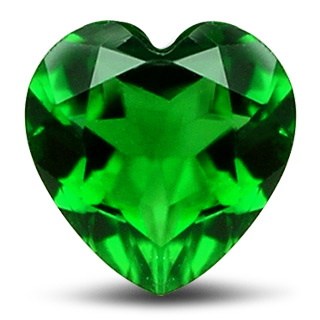
Chrome is a special variety of green tourmaline that owes its vivid green hue to trace amounts of chromium and vanadium. These are the same elements that also impart to emerald and tsavorite garnet their distinctive pure green hues. It should not be surprising, therefore, that the finest chrome tourmaline tends to resemble the finer examples of emerald and tsavorite. Chrome tourmaline is actually a distinct tourmaline variety called chrome dravite, found in East Africa. Chrome tourmaline is often associated with tsavorite garnet; miners will usually concentrate their efforts on tsavorite, as it fetches higher prices.

Chrome tourmaline is a rather special member of the tourmaline group. Found only in east Africa, it is usually found mainly in small sizes. But what it lacks in size it makes up for in colorr. It displays perhaps the richest, most intense green in the gemstone world.

Between chrome tourmaline and tsavorite garnet werefound in the same locations in Tanzania, and both are colored by chromium and vanadium. Miners will usually concentrate their attention on tsavorite, since it has more of an established market and fetches higher prices. But chrome tourmaline, while more scarce, is in many ways the equal of the finest tsavorite.

Like emerald and tsavorite garnet, fine chrome tourmaline is a visually pure “forest” green with slightly yellowish to bluish secondary hues. The blue will normally show itself in incandescent light, the yellow will be more visible in daylight. The same criterion applied to tsavorite garnet and emerald is applicable to chrome tourmaline.


www.indonesiajewelry.com

Chrome Diopside, The Obvious Green

Chrome Diopsite

Chrome Diopside

Looking for a fine green gemstone with rich color and excellent clarity? Diopside is a monoclinic pyroxene mineral. The name Diopside is derived from the Greek word ‘di’ meaning two, and ‘opsis’, meaning vision.

Chrome Diopside’s popularity rose in 1988 when material surfaced in Europe. Dealers raved about its green color that resembled that of Tsavorite and Chrome Tourmaline at a fraction of the cost. Since then, Chrome Diopside has been granted class one export status among Russia’s mineral resources, a ranking that includes Diamond, Emerald, and Alexandrite.

The important diopside find in Russia is in eastern Siberia, close to the famous diamond mines. This diopside is colored by chromium, the same element that gives the color to ruby, emerald and alexandrite. The color was spectacular; chrome diopside literally glows with green.

However, there are a few limitations to this gem. First, chrome diopside can actually suffer from too much green. In larger sizes the tone can be very dark. Careful cutting is required in the larger sizes to keep the angles slightly shallow to improve brilliance. But in smaller sizes (under 2 carats) the color is exceptionally vivid and fresh.

The main factor to consider when purchasing Chrome Diopside is the color, with medium dark green stones being at the pinnacle of the value spectrum. The quality of the cut will also significantly enhance the value considerably by adding brilliance and scintillation. Specimens over 2 carats displaying a rich green color are incredibly rare and will naturally demand high premiums.

Diopside is believed to be a creative stone, increasing creative visualization and helping to manifest desired goals. It has also been said that it can improve the wearer’s intellect, particularly with regards to mathematical and analytical abilities. In addition to this, Diopside is believed to alleviate aggression and stubbornness, and is said to be related to love, commitment, and the inner heart.

Physically, Diopside is believed to heal the heart, lungs, and the circulatory system. It is also believed to aid with psychological disorders and weaknesses.


www.indonesiajewelry.com

Clinohumite, A Very Rare Gemstone

Clinohumite

Clinohumite

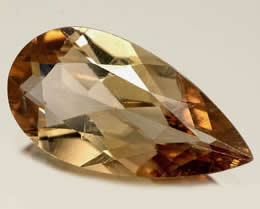
Clinohumite is a very rare gemstone, named after its monoclinic crystal structure and its relation to humite which was named after Sir Abraham Hume (1749-1838), English collector of gemstones, minerals, and pieces of arts.

The color of Clinohumite can be brown, yellow or white. This gem has a hardness of 6 on the Mohs scale. Clinohumite is considered to be a semi-precious gemstone. Very limited in nature and mined in only two spots on earth, which is the Pamir Mountains of Russia and Tanzania. Clinohumite is among the 10 rarest gemstones on earth, with only a few thousand carats known to exist in private collections. While extremely rare, some 1-2 carat stones are available.

www.IndonesiaJewelry.com

Cat’s Eye Apatite

Cat's Eye Apatite

Cat’s Eye Apatite

Apatite is one of a few minerals that are produced and used by biological micro-environmental systems.

The word Apatite is derived from the Greek word “apate’, meaning to deceive. This was primarily due to the fact that Apatite was often mistaken for rarer, more valuable gemstones such as Beryl, Olivine and Peridot. Apatite falls into two categories, Chlor-Apetite (Chloro-Calcium), and Flour-Apetite (Flouro—Calcium). The name Cat’s eye is derived from the phenomena displayed by this stone known as chatoyancy.

The range of colors on Cat’s eye apatite includes colorless, pink, yellow, green, blue and violet. A rare variety is a rich purple from Maine. Blue Brazilian stones are second in demand. A light green variety of apatite carries the trade name “asparagus stone”. The recent availability of the neon blue-green variety from Madagascar has increased the use of apatite in jewelry.

Chatoyancy, the cat’s eye effect, is a reflection of light by parallel fibers, needles, or channels, which resembles the slit eye of a cat. When the stone is rotated, the cat’s eye glides over the surface.

Cat’s eye apatite is a rarity at apatite mines. Apatites are found in Brazil, India, Kenya, Madagascar, Mexico, Myanmar (Burma), Norway, Sri Lanka, South Africa and the United States, and it is generally untreated.


www.IndonesiaJewelry.com

Cassiterite Gemstone

Cassiterite Gemstone

Cassiterite

Cassiterite is the most important ore that occurs from tin and is marked with high durability. The name of this mineral is derived from the word “Cassiterides” which was used to describe British islands during the pre-Roman times. Their most prevalent usage is in the form of gemstones. The name Cassiterite was derived from a Greek word “kassiteros” which stands for tin. It is also popularly known as ‘tinstones’.

Cassiterite occurs in pegmatites and can be washed into alluvial deposits. Localities include the Malay Peninsula, England, Germany, Australia, Bolivia, Mexico and Namibia.

Cassiterite is a rare natural gemstone. The color of Cassiterite can be black, brownish black, brown, gray, yellowish, greenish, red or colorless. Cassiterite has a hardness of 6 to 7 on the Mohs scales. Cassiterite has much more dispersive fire than even diamond. Cassiterite is one of the rarest gemstones.

Cassiterite is primarily concentrated in alluvial surfaces. They are mainly available in the tin mines located in Bolivia where they exist in hydrothermal veins. This type of ore is available in small elements that are derived from igneous rocks. The different aspects of this ore are elaborately arranged and exhibit tremendous amount of luster. Associated minerals with which cassiterite ores are generally found are Tourmalines, Molybdenite, Bismuthinite, Topaz, Fluorite, and Wolframite.

www.indonesiajewelry.com

Calcite Powerfull Stone

Calcite Gemstone

Calcite

Calcite is a carbonate mineral and the most stable polymorph of calcium carbonate. The other polymorphs are the minerals aragonite and vaterite. Aragonite will change to calcite at 470 °C, and vaterite is even less stable.

Calcite is mostly found in sedimentary rock. Calcite turns into the rock called limestone. Some limestone is made when sea creatures die and their skeletons and shells fall to the bottom of the ocean.

Calcite is mined using quarrying or underground mining. Calcite/limestone is used for making glass, paper, photography, statues, building, and animal food. The Ancient Egyptian Sphinx [below] is made of limestone. Calcite is one of the most important carbonate minerals. It is often referred to as a industrial mineral, and is found in over 300 forms.

Calcite may be any color, from colorless to black, depending upon the other minerals contained in it. Almost all of the ancient alabaster artifacts of ancient Egypt were not really alabaster. The artifacts were actually made of calcite. Calcite has striking beauty and offers much variety in color and form. The name calcite is derived from the Greek word “chalx” which means lime. Calcium carbonate is lime stone and calcite is a beautiful variation that naturally exists in a variety of colors and forms.

Calcite has a special characteristic known as bi-refringent. Anything that you see by looking through a bi-refringent gemstone will appear doubled. The calcite crystal has a light-splitting ability and creates what appears as image duplication. This property is important to gemologists. Calcite is used in an instrument called the calcite dichroscope. This instrument is used to see different colors as they are transmitted through a gemstone.

Gem therapists claim a person who wears golden/yellow calcite will experience wisdom and mental harmony. Red calcite is an energy booster. Orange calcite enhances energy for new beginnings in life. Green calcite provides joy and emotional balance. Blue calcite brings those in authority into righteous power.

www.indonesiajewelry.com

Axinite Gemstone

Axinite Gemstone

Axinite

Axinite is a group of brown to violet-brown or reddish brown minerals that sometimes occur in gem quality. Axinite is distinctive for its strong vitreous luster when polished, and its interesting pyro- and piezo-electric properties. Axinite is also popular with mineral collectors due to its unusual crystal structure.

Axinite is a gemstone which gets its name from the term ‘acine’ which in Greek, means axe. Axinite was discovered by R.J.Hauy in 1797. The crystals are wedge or axe shaped. This gemstone is not a birthstone but sometimes one mistakes Axinite for Quartz.

Axinite is considered to be a semi-precious gemstone and while limited in nature, gems of good color and size are available, however, faceted stones above 1 carat are rare. Despite being a bit brittle, Axinite’s brilliance and sumptuous colors ranging from a rich clove color to a vivid blue, make it a exquisite and unique gemstone that is keenly sought after by collectors and connoisseurs alike. Currently, the most in demand colors of Axinite are the earth toned browns.

www.indonesiajewelry.com