Monthly Archives: May 2011

Ruby In Zoisite

Ruby Zoisite

Ruby Zoisite

Zoisite is type of mineral, it was first discovered by the mineral dealer Simon Prešern, who discovered it in the Saualpe mountains of Austria in 1805. He brought a sample to the Slovene mineralogist Sigmund Zois (1747-1819), who recognized it as a previously unknown mineral. It was first named Saualpite, after its location, then named Zoisite in honor of Baron Zois.

There are in fact three gemstone members of the zoisite species: tanzanite, thulite and anyolite. Tanzanite, still found only in its first location in Tanzania, is very well-known, but thulite and anyolite are not. Thulite is an opaque, massive manganese-rich variety of zoisite that is pink in color.

Anyolite was first discovered near Longido in Tanzania in 1954. Though considered a variety of zoisite, strictly speaking it is a metamorphic rock composed of intergrown green zoisite, black hornblende and ruby. Sometimes it is called Ruby-Zoisite, since its chief attraction is the interesting contrast of green zoisite and red ruby. The name Anyolite apparently comes from the Masai anyoli, meaning “green.”

While it was was not fine ruby, this material eventually found its uses in carvings, ornamental objects and cabochons. The combination of the green zoisite with its black streaks of hornblende, and the rich red and pink ruby is unique and attractive. It is one of the most colorful ornamental stones found in the world and the abundance of the material makes it very affordable, even in larger sizes. Ruby-zoisite rocks are difficult to fashion because of marked differences of hardness of their chief constituents.

Ruby-zoisite carvings are very popular, and the material is particularly well-suited for figures like turtles. Large cabochons make attractive pendants and recently we have seen some nicely polished faceted pieces that are very attractive.

www.indonesiajewelry.com

Rubellite Tourmaline

Rubellite

Rubellite

The rubellite is a particularly beautiful gemstone from the colourful family of the tourmalines. Tourmalines are all related gemstones where the different colored stones are named by adding the color to the term. Red colored tourmalines are basically called red tourmalines. Pink tourmalines, green tourmalines and Paraiba tourmalines are all very popular forms. However there is an exception here where not all red tourmalines are called rubellites. Rubellite comes from the Latin name ‘rubellus’ that means reddish and rubellites are not just red or shocking pink tourmalines. There is a criterion to be followed and met for a red tourmaline to be called a rubellite tourmaline.

Basically, gemstones tend to change color based on the light source. However this does not exist in the case of true rubellites. This means that the rubellite tends to shine as intensely in artificial light as it does in daylight. In the case of red or pink tourmaline, the stone tends to display a tinge of brown in the presence of artificial light. Rubellites are found in abundance in Brazil, Mozambique, Nigeria, Madagascar and Pakistan. There is also a rubellite mine in the USA. Today rubellite tourmaline is one of the most popular gemstones available and fits well with almost any jewelry.

Rubellites are quite rare and have only become popular in the last few centuries. Some of the Russian Crown Jewels from the 17th century, once thought to be rubies, are actually fine examples of rubellite gemstones.

Rubellites are believed to strengthen love and devotion as well as inspire creativity. Rubellite gemstones are also thought to help reduce stress, tension and anxiety.

www.indonesiajewelry.com

Rhodolite Garnet

Rhodolite Garnet

Rhodolite Garnet

When most people hear the name Garnet they think red. But Garnets are more then just a cheap red gemstone. Garnets can come in a wide variety of colors and some can be quite valuable. This guide is a comprehensive look at many different kinds of Garnets and their individual properties.

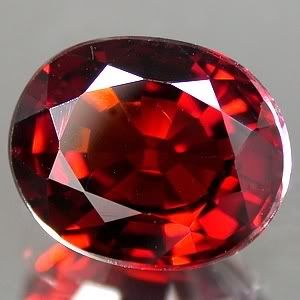
Rhodolite is a varietal name for rose-pink to red mineral pyrope, a species in the garnet group. It is found in Cowee Valley, Macon County, North Carolina. Rhodolite comes from the Greek word “rhodon” for “rose-like”.

Rhodolite tends to be lighter in color than most other kinds of red garnet. It can sometimes be confused with ruby because of the similarity in color. The mixture of red and violet in rhodolite is very attractive.By the colouration, and the commonly inclusion-free nature of garnet from this locality, has led to rhodolite being used as a semi-precious gemstone.

The composition of rhodolite is situated between almandite (almandine) and pyrope. Although each stone varies slightly, the mixture is roughly about 55 percent pyrope and 37 percent almandite, along with other elements.


www.indonesiajewelry.com